 Screen printing machine
The Complete Guide to Screen Printing Machines for Industrial Production
The Complete Guide to Screen Printing Machines for Industrial Production
1. Introduction to Industrial Screen Printing Machines
Screen printing machines have become essential equipment for modern manufacturing. They are widely used in industries such as packaging, labels, textiles, electronics, medical devices, advertising, and automotive parts. With the demand for high-precision printing growing rapidly, businesses are looking for automatic screen printing machines that can deliver stable quality, high output, and consistent performance.
In this complete guide, we explain what a screen printing machine is, how it works, and how companies can choose the right model for their production. The article also covers the latest technology trends such as CCD alignment, roll-to-roll systems, servo control, and smart automation.
Typical high-traffic keywords included in this article:
screen printing machine, automatic screen printer, industrial screen printing equipment, silk screen printing machine, roll to roll screen printer, label screen printing machine, screen printer manufacturer, screen printing for packaging, screen printing for electronics.
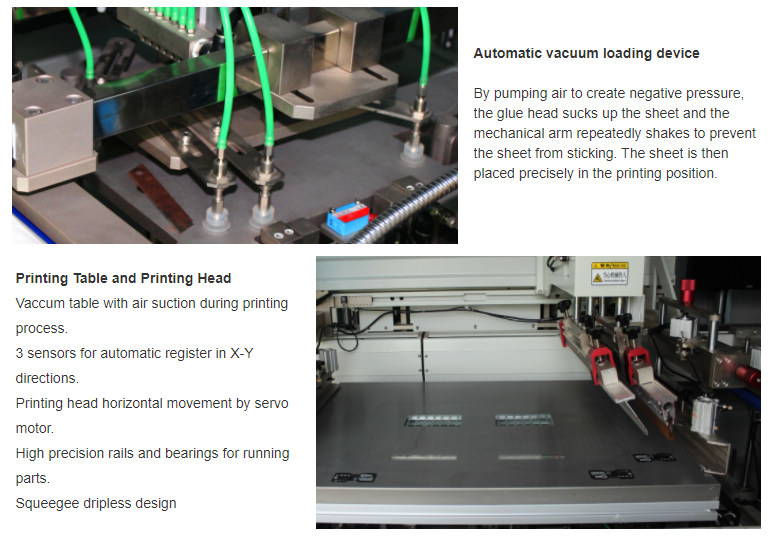
printing structure
2. What Is a Screen Printing Machine?
A screen printing machine is a printing device that uses a mesh screen to transfer ink onto a substrate. Areas not meant to be printed are blocked using a stencil. The ink is pushed through the mesh using a squeegee, forming a printed pattern.
Compared with digital or offset printing, screen printing offers several benefits:
Thicker ink deposition
High durability and weather resistance
Rich color performance
Ability to print on almost any material
Low printing cost for mass production
Because of these advantages, screen printing remains the first choice for labels, stickers, electronics, and film materials.
3. Applications of Industrial Screen Printing Machines
Screen printing machines are used in many different industries. Below are the most profitable markets today:
3.1 Electronics and PCB Industry
High-precision roll-to-roll screen printers are used for PET film circuits, membrane switches, flexible printed electronics, silver paste printing, and conductive patterns.
3.2 Packaging and Label Industry
Automatic screen printing machines are widely used for:
Self-adhesive labels
Cosmetic packaging
Bottle labels
Resin domed labels
PVC or PET industrial tags
3.3 Textile Industry
Screen printing machines are used for T-shirts, garments, socks, gloves, and other textiles.
3.4 Automotive and Appliance Panels
Printing car dashboards, control panels, window films, and appliance panels.
3.5 Advertising and Gifts Industry
Used for posters, signs, gift boxes, specialty prints, UV spot coating, and metal printing.
4. Types of Screen Printing Machines
To help buyers choose the right model, here are the most common types:
4.1 Flatbed Screen Printing Machine
Best for packaging, panels, metal sheets, glass, and thick materials. Offers high accuracy and stable printing.
4.2 Roll-to-Roll (R2R) Screen Printing Machine
Ideal for labels, PET films, and flexible substrates.
SEO keyword: roll to roll screen printer, label printing machine.
4.3 Cylinder Screen Printing Machine
Used for round and flat products such as cosmetics bottles, tubes, jars, and containers.
4.4 Semi-Automatic Screen Printer
Budget-friendly solution for startups and small factories.
4.5 Fully Automatic Screen Printing Line
High-speed lines for mass production. Includes automatic feeding, CCD alignment, printing, drying, and stacking.
5. Key Features to Look for When Choosing a Screen Printing Machine
5.1 CCD Registration System
A CCD camera alignment ensures highly accurate positioning. Essential for electronic film printing.
5.2 Servo Motor Control
Improves stability, printing repeatability, and speed.
5.3 Automatic Feeding System
The feeder reduces labor and increases productivity for roll or sheet materials.
5.4 UV/IR Drying
Choose depending on ink type. UV curing is faster and produces a hard finish.
5.5 Easy Operation and Maintenance
Clear interface, touch screen control, and modular parts improve productivity.
6. Benefits of Using an Automatic Screen Printing Machine
Higher production speed
Lower labor cost
Consistent printing quality
Reduced waste
High reliability for long working hours
Perfect for large-scale manufacturing
7. How to Improve Production Efficiency
Here are practical tips for screen printing factories:
Use pre-tensioned frames to maintain mesh stability
Keep squeegee hardness consistent
Use anti-static treatment for PET films
Adjust ink viscosity regularly
Perform routine maintenance to avoid downtime
8. Why Choose a Professional Screen Printing Machine Manufacturer?
The supplier makes a big difference. A reliable manufacturer should offer:
Strong R&D
CE and ISO certifications
Fast after-sales support
Spare parts availability
Training and installation services
A professional supplier helps customers reduce failures, improve printing accuracy, and extend machine lifetime.
9. Conclusion
Screen printing remains one of the most profitable printing technologies in the world. With the rise of automation, companies can now enjoy faster speed, higher precision, and lower cost. Whether you are in the electronics, packaging, textile, or label industry, choosing the right automatic screen printing machine can significantly improve your production capability.